Building Aerodynamics

Written specifically for practicing Architects and Engineers, as well as students, this thorough guide explains topics such as wind, wind environments, ventilation, fire, and sailing, and the relevant expressions they present.
 TABLE OF CONTENTS
 The number of "Fully Dynamic" buildings is negligible, the "Mildly Dynamic" ones are more interesting to the Wind Engineer and are also few in number. If there is any doubt whether a building or member is dynamic, the usual approach is to assume that the building is mildly-dynamic, work out the Dynamic Augmentation Factor, and if this is above 0.25, then go back to the beginning and conduct a Fully-dynamic study.
The major parameter is the size of the structure. For maximum correlation over the structure, or that part of the structure under consideration, the minimum averaging time which will contribute to the load is given by the TVL formula, viz.:

For a mean wind speed of 22.5 m/s this expression reduces to
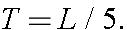
In other words, for maximum correlation over 25 m, an averaging time of 5 seconds is required. The implication of this on the spectrum of loading is that the spectrum should be truncated at 0.2 Hz,. This is the reason for the statement that any member of 25 m or more, shall suffer no dynamic effects providing its natural frequency is over 0.5 Hz (a period of less that 2 seconds). Larger structures are unaffected by even lower natural frequencies. The effect of size is discussed in Section 3.3.7.
However to demonstrate the procedure, it will be explained for the minimum averaging time recommended for wind loading, i.e. 0.5 seconds.
There are three sets of parameters which control the Dynamic Augmentation Factor for...