Building Aerodynamics

Written specifically for practicing Architects and Engineers, as well as students, this thorough guide explains topics such as wind, wind environments, ventilation, fire, and sailing, and the relevant expressions they present.
 TABLE OF CONTENTS
 This chapter gives a brief introduction to the statistics necessary for an understanding of the analyses performed on the data. The variation of a parameter with time will be called a signal.
A signal which varies with time has two dimensions, its magnitude or size, and its frequency or variation with time. Statistical terms must be defined to describe both these attributes.
The first section defines the terms, the second describes how magnitude is defined, the third how time or frequency is considered, the fourth deals with the interrelation of two fluctuating signals, and the last with extreme value analysis.
Assume that the time varying function X (t) can be written as

where x is the constant part, and x(t) is the fluctuating part which has zero mean value.
The Mean (x) value of a signal is the average value over the length of the sample
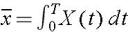
The Root Mean Square (X2) value of the signal is the average value of the integral of the square of the signal over the sample:

The Standard Deviation ( ? x) is the square root of the average value of the square of the difference between the value of the signal at that time and the mean value of the signal:

it is also equal to the square root of the difference between the Root Mean Square and the square of the Mean.
The Variance ( ? x) is the square...