Mathematical Methods For The Natural And Engineering Sciences

Comments and Reference

  1. L. Elsgolts, Differential Equations and the Calculus of Variations (MIR Publishers, Moscow, 1970). See Chapter 4, section 6.

  2. R. E. Mickens, Acta Physica Polonica B14, 561 (1983).

  3. The discussion in section 4.4.5 is based on the presentation given in the text of C. M. Bender and S. A. Orszag, Advanced Mathematical Methods for Scientists and Engineers (McGraw-Hill, New York, 1978); see section 4.4.

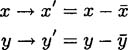
  4. For these discussions, we take the fixed-point to be located at the origin, i.e., ( x,y) = (0, 0). If for a given set of equations, the fixed-point is not at the origin, i.e., x ? 0 and y ? 0, then a linear change of variables

    will shift the fixed-point for the new variables, ( x ?, y ?) to (0, 0).

  5. A good introduction to the use of matrix techniques to solve systems of linear differential equations with constant coefficients is the text by M. M. Guterman and Z. H. Nitecki, Differential Equations, 3rd. ed. (Saunders, New York, 1992); see Chapter 3.

  6. The proof of this theorem and detailed discussions of its meaning and how it can be applied are given in many places. See for example the following books:

    • V. I. Arnold, Mathematical Methods of Classical Mechanics (Springer-Verlag, New York, 1978).

    • J. Guckenheimer and P. Holmes, Nonlinear Oscillations, Dynamical Systems, and Bifurcations of Vector Fields (Springer-Verlag, New York, 1983).

    • E. A. Jackson, Perspectives of Nonlinear Dynamics, Vols. 1 and...

UNLIMITED FREE
ACCESS
TO THE WORLD'S BEST IDEAS

SUBMIT
Already a GlobalSpec user? Log in.

This is embarrasing...

An error occurred while processing the form. Please try again in a few minutes.

Customize Your GlobalSpec Experience

Category: Tilt Sensors
Finish!
Privacy Policy

This is embarrasing...

An error occurred while processing the form. Please try again in a few minutes.