Recent Developments In Reliability-Based Civil Engineering

2. Polynomial Approximation of Nonlinear Wave Forces

2. Polynomial Approximation of Nonlinear Wave Forces

To facilitate either quasi-static or frequency-domain computations, one simplification often adopted is the polynomial approximation of nonlinear drag forces.5 , 25 28, 37 42 Statistical linearization, which is convenient for both spectral derivation and numerical computation, has long been used to simplify the Morison drag force.5 , 56 59 However, linearization can only capture the response mean and variance and unable to account for non-Gaussian features. This necessitates higher degree polynomial approximation of nonlinear drag. In this section, least squares and moment-based approximations will be discussed.

2.1. Morison and Inundation Drag Forces

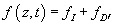
Morison et al.56 suggested that the in-line force per unit length acting on a stationary slender vertical cylinder can be expressed as:

(1)

where I and f D are inertia and drag forces respectively in which:

(2)
(3)

where C M and C D are respectively the inertia and drag coefficients, assumed constant along the submerged cylinder; A I = ??D 2/4 and A D = ?D/2; ? is the water mass density; D is the equivalent diameter of the cylinder; u = u( z, t) is the water particle velocity (to be replaced by u + C if current C exists) at the position z; z is positive upwards from still water level (SWL); and a is the particle acceleration.

If fluid-structure interaction is modeled, Morison's equation needs...

UNLIMITED FREE
ACCESS
TO THE WORLD'S BEST IDEAS

SUBMIT
Already a GlobalSpec user? Log in.

This is embarrasing...

An error occurred while processing the form. Please try again in a few minutes.

Customize Your GlobalSpec Experience

Category: Electric Brakes
Finish!
Privacy Policy

This is embarrasing...

An error occurred while processing the form. Please try again in a few minutes.