Practical Balancing of Rotating Machinery

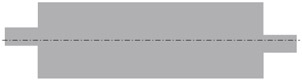
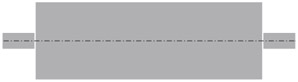
A rotor that is out of shape won't run smoothly.

It is obvious that there is no way that a rotor with misaligned bearings like this would run. It is unbalanced so we need to bring it into balance by aligning the rotor mass with the bearing centers. The original version would not run. It would destroy bearings and shake loose everything around it.

Guess what, that is exactly what happens when the errors are a few ten thousandths of an inch a couple of hundredths of a millimeter. All this fuss about balancing is about errors that rarely go above the 0.005" range down to less than a ten thousandth of an inch.
If you attempted to build a high speed machine with tolerances close enough that you could eliminate balancing, it would cost a huge amount and may even not be possible to make. Balancing is not an added cost item but a process that enables other operations to be less precise and therefore the product is less expensive to produce.

Balancing is an enabling technology that has been the key to navigational gyroscopes, jet engines, turbo pumps for rocket engines (like the space shuttle) and even the automobile engine. The high speed machining of airplane parts is dependent on high precision balancing and the machinery making 'Facial Quality Tissue' could not run without very sophisticated balancing operations. Just consider for a moment that tissue paper is produced at a speed...