Antenna Engineering Handbook, Fourth Edition

Roderic V. Lowman
Techni-Quest, Inc.,
Rainee N. Simons [*]
Consultant
In the applications of antennas, it is necessary to use some form of transmission line to connect the antenna to a transmitter or receiver. It is essential to know the propagation characteristics of the more common forms of line.
The transmission lines in Sections 51.2 to 51.6 are almost always used in the transverse electromagnetic (TEM) mode of propagation and therefore possess a unique characteristic impedance. In air, the guide wavelength ? g is equal to the free-space wavelength ? Propagation in this mode exists at any frequency, although above a certain frequency higher modes may also exist. It is assumed that the line loss is small and may be neglected in calculating the characteristic impedance.1
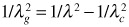
The waveguides considered in Sections 51.7 and 51.8 use modes of propagation having a longitudinal component and do not possess a unique characteristic impedance.2 Propagation may only take place above a certain unique cutoff frequency defined by the mechanical dimensions. The guide wavelength ? g is related to the free-space wavelength ? by
where ? c is the cutoff wavelength.
In all cases,...