Applied Mathematical & Physical Formulas

Calculus

Overview

Calculus is a branch of mathematics developed from algebra and geometry and built on two major complementary ideas.

One concept is differential calculus. It studies rates of change, such as how fast an airplane is going at any instant after take-off, the acceleration and speed of a free-falling body at a particular moment, etc.

The other key concept is integral calculus. It studies the accumulation of quantities, such as areas under a curve, linear distance traveled, or volume displaced.

Integral calculus is the mirror image of differential calculus.

This section contains:

  1. Limits

  2. Derivatives

  3. Application of Derivatives

  4. Integration

  5. Basic Integrals

  6. Application of Integration

1 Limits

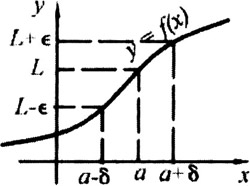
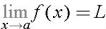
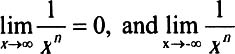
If the value of the function y = f( x) gets arbitrarily close to L as x approaches the point a, then we say that the limit of the function as x approaches a is equal to L. This is written as


2 Rule for Limits

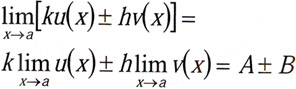
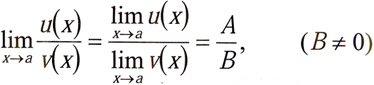
Let u and v be functions such that


  1. , n is a positive integer where a, k, h, n, A, and B are real numbers.

where

a, k, h, n, A, and B are real numbers.

3 Slope of Tangent Line

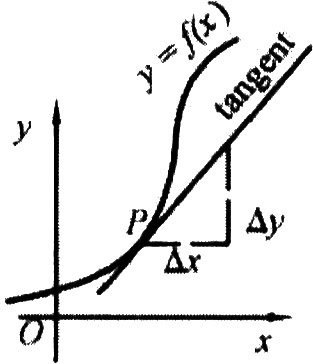
The gradient m of a curve y = f( x) varies from point to point. The gradient of a curve is the slope of the tangent at some point P of...

UNLIMITED FREE
ACCESS
TO THE WORLD'S BEST IDEAS

SUBMIT
Already a GlobalSpec user? Log in.

This is embarrasing...

An error occurred while processing the form. Please try again in a few minutes.

Customize Your GlobalSpec Experience

Category: Color Meters and Appearance Instruments
Finish!
Privacy Policy

This is embarrasing...

An error occurred while processing the form. Please try again in a few minutes.