This and the following two chapters cover ANSI/ISA-88.01 Section 5, Batch Control Concepts. These concepts must be understood in order to grasp the meanings of Section 6, Batch Control Activities and Functions. Covered are equipment entities, recipes, production schedules and reports, allocation and arbitration, modes and states, and finally, exception handling. This chapter covers Sections 5.1 and 5.2 on equipment entities.
5.1 Structure for Batch Control
There is a three-level hierarchy for the concept of control. The levels are Coordination, Procedural, and Basic control. See Figure 7-1, which is not in 88.01. This hierarchy is necessary because each level requires a different way of thinking about a problem. In 2005, each level also requires different control equipment capabilities. This is not so much because different computers are required as it is that each level is worth more than the one below it, but that's nothing that a free market can't sort out.
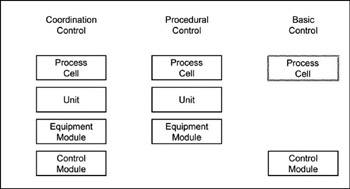 Figure 7-1: Three-Level Hierarchy of Control
 5.1.1 Basic Control
At the lowest, most basic level we find Basic control. There is no simpler control. It could also be called Basis control because the higher levels can not work without it. It is Basic control that can change and hold the state of the process material (e.g., pressure, temperature, agitation, composition of reactor headspace gas). It is Basic control that can change and hold the state of the equipment configuration (e.g., transfer header, heat exchange media).
Basic control includes the six types of control discussed in Chapter 3 regulatory, discrete,...
Copyright ISA – The Instrumentation, Systems, and Automation Society 2006 under license agreement with Books24x7

 TABLE OF CONTENTS