4.10 Typical Device Development Process
Owing to the diverse nature of medical devices, development cycles are highly variable across the industry.
Devices can be looked upon as being durable, implantable, or disposable, and perform either therapeutic, diagnostic, or monitoring functions. Examples of each type are durable device: lithotripsy machine used to break kidney stones in vivo; implantable device: pacemaker; disposable device: bandaid. Most in vitro diagnostic products are also looked upon as devices, but will be discussed in a separate section.
The product development process also depends largely on the FDA classification of risk, which will dictate the extent of safety and clinical testing required. Therefore, it is important to understand the classification schema for devices discussed in Chapter 5. Additionally,devices thatcarry outequivalentfunctionsand are similarto otherapproved devices will have a shorter development path, and this is discussed later in Chapter 5. Therefore, this section specifically covers new medical devices that have new characteristics or applications and require a full development path with rigorous clinical studies.
Depending on the technology, novelty, application, and other factors, product development may take from a few months to a few years and may cost from a few hundred thousand dollars to millions of dollars (see Figure 4.14b). However, most devices are developed through the key schematic steps shown in Figure 4.14a. These steps are discussed in the following sections.
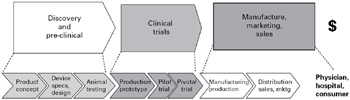 Figure 4.14a: Schematic of device development value chain and process.
 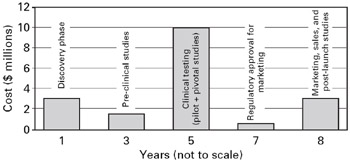 Figure 4.14b: Time and cost for development of an innovative implant device (exemplary data...

 TABLE OF CONTENTS