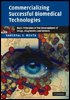
Commercializing Successful Biomedical Technologies: Basic Principles for the Development of Drugs, Diagnostics and Devices
How are products transferred into commercial manufacturing operations successfully?
When to begin commercial manufacturing planning.
What determines the commercial scale of manufacturing?
How is the cost of goods (or the cost of the final product) estimated?
What controls and systems are needed to comply with regulatory oversight of manufacturing processes?
What standards apply to manufacturing processes?
What are the timing and quantity requirements for scale-up of production for drugs, devices and diagnostics?
What key issues typically arise in the production or scale-up processes for biological or synthetic drugs?
How does Design for Manufacturability and Assembly prepare for device manufacture?
The transition from the new product development environment, of early product versioning and animal testing, to manufacturing environment operations is a significant one for a project team. It means that the results to date have shown significant reduction in technology risk and that the product has demonstrated feasibility, safety, and efficacy in living systems.
Technology transfer is the systematic means of conveying knowledge (product, process, equipment, and method), documentation, and skills between two parties. In manufacturing companies, the term technology transfer covers the process of converting small-scale R&D processes or early design and laboratory prototypes to larger-scale bulk manufacturing processes, and specifically involves the transfer of the product and production know-how from the R&D group to the commercial operations group...