Overview
In today's business environment, every conceivable advantage is being pursued by companies. They have implemented improvement tools and techniques, such as Total Quality Management (TQM), Just-in-Time Manufacturing (JIT), Total Employee Involvement (TEI), benchmarking, time-based competition, outsourcing, partnering, reengineering, and change management. In the first decade of the 2000s, many companies are shifting their focus to the optimization of their assets. Because companies realize that the majority do not have "stealth" assets or processes, they must be more efficient and effective than their competition in utilizing the assets and processes.
This competitive focus involves virtually all parts of the organization that impact the effectiveness of the asset. The group within the company that has the largest impact on the assets is the maintenance department, as well as those responsible for the maintaining function in a company. Because the maintenance function has the greatest impact on the condition and, ultimately, the capacity of the asset, companies are searching for the best method of managing maintenance.
Companies have tried different organizational structures, changing reporting structures, upsizing, downsizing, contracting out, and empowering teams in an attempt to manage maintenance. However, the majority of companies have not been able to effectively manage maintenance. The single largest contributing factors to this have been the lack of a proper understanding of the maintenance function and the development of measurement and control systems for maintenance.
Performance Measures
Performance measures have been misunderstood and misused in most companies today. Performance indicators are just that, an indicator of performance.

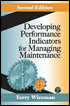
 TABLE OF CONTENTS