Dry Gas Seals Handbook

Secondary Gas Seal Vent

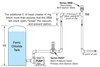
As explained in chapter 3, seal gas for a tandem gas seal is injected between the inner labyrinth seal and the primary gas seal. A very small amount of the sealing gas passes through the primary seal and out the primary vent. An even smaller amount (typically less than 0.1 SCFM) of sealing gas passes through the secondary seal and out the secondary vent. The majority of the flow through the secondary vent is separation gas (usually nitrogen or air) that has passed through the barrier seal outboard of the dry gas seal.

The secondary vent should be fabricated from stainless steel piping. The vent system should be equipped with a drain and valve at its lowest point to allow removal of any potential lube oil carryover from the bearings. The secondary vent is usually vented to atmosphere. If the secondary vent is connected to a flare system, a check valve must be installed to prevent any potential back pressure in the vent, which could cause damage to the secondary gas seal and/or barrier seal. The secondary vent should be sufficiently sized to avoid forcing an excessive flow of separation gas into the compressor-bearing housing and/or coupling guard area, causing overpressurization and perhaps interfering with the normal venting of these areas.

Secondary gas seal health

It is difficult to monitor the health of the secondary seal of a tandem gas seal. Unlike the primary seal vent, a flow or pressure measurement of the secondary vent is...

UNLIMITED FREE
ACCESS
TO THE WORLD'S BEST IDEAS

SUBMIT
Already a GlobalSpec user? Log in.

This is embarrasing...

An error occurred while processing the form. Please try again in a few minutes.

Customize Your GlobalSpec Experience

Category: Vacuum Valves
Finish!
Privacy Policy

This is embarrasing...

An error occurred while processing the form. Please try again in a few minutes.