Overview
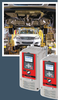
Industrial electronics is the term for the specialized electronic devices, circuits, and systems developed to support the manufacturing, chemical, food processing, and other industries. It includes measurement instruments, data-acquisition and display systems, and process controls. These are typically heavy-duty components and systems because they are subjected to more abuse, a more demanding environment, and exposure to corrosive chemicals and vapors. Moreover, they must meet standards of reliability equal to if not greater than military electronics equipment to minimize downtime and increase productivity. Consequently, many components are packaged in heavier, more rugged enclosures than are comparable consumer or commercial electronics.
Industrial electronics make use of a wide range of hardware, from sensors and transducers to measuring and recording instruments for those variables associated with machine and process control such as temperature, pressure, speed, flow rate, acidity, current, voltage, and power. Industrial robots and manually controlled manipulators are examples of the marriage between mechanisms and industrial-grade electronics.
The subjects of closed- and open-loop control and servo- and synchrosystems discussed here could also have been placed in the section on military and aerospace electronics because of developments and advancements made in those areas for the control of military aircraft, ships, and weapons during and after World War II.
Computers have also had an impact on industrial electronics, primarily because of their ability to control machines and processes with software rather than their ability to process data and perform extensive computations. Computers for machine and process control eliminated banks of relays and...


 TABLE OF CONTENTS