Radar (for radio detection and ranging) is an active radio transmitting and receiving system capable of detecting and determining the range and bearing of distant targets such as ships or aircraft. A radar system illuminates distant objects with RF energy and then receives, detects, and displays the reflected energy. Radars are installed in ground stations, aircraft, ships, spacecraft, and vehicles.
A typical pulsed-radar system is shown in the simplified block diagram Fig. 23-1. The transmitter emits high-powered RF in short pulses through a directive antenna that illuminates the object or target. The returned echo is received, usually by the same antenna, passed by a transmit-receive (TR) switch and amplified by a high-gain, wideband receiver. The output of the receiver can then be displayed on a cathode-ray tube in any of many different formats or on a raster-scanned liquid-crystal display.
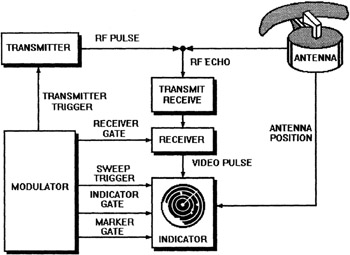 Figure 23-1: Radar system block diagram.
 Target bearing or azimuth is determined from the direction of the antenna's axis when the echo is received. Range is measured in units of time (typically microseconds) for direct conversion into distance (nautical miles, yards, meters, or feet). RF energy travels at the speed of light, 300 m/ ?s, so it takes about 7 ?s for RF energy to make a 1-km round trip.
Radars transmit high frequencies, typically in the microwave band, because short wavelengths permit higher antenna directivity, more accurate range readings, and better resolution of targets. Analysis of the display yields information on target...


 TABLE OF CONTENTS