Engineering Mechanics of Composite Materials

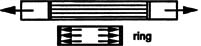
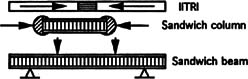
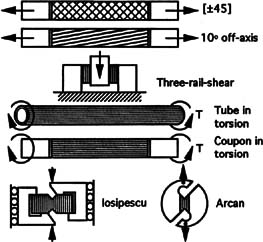
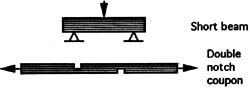
Methods of physical and mechanical characterization of constituent and composite materials were reviewed. The physical and mechanical characterization of the fiber and matrix constituents is necessary for the application of micromechanics in understanding and predicting the macroscopic behavior of composite materials. In the macromechanical approach, the unidirectional lamina is considered the basic building block, and its full characterization is essential for any subsequent theoretical, numerical, or experimental analysis of composite structures. Many of the methods discussed have been standardized and the relevant ASTM specifications were mentioned in the text. A summary of test methods for characterization of the unidirectional lamina is given in Table 8.4.
| Tested Property (ASTM Standard) | Specimen Configuration | Elastic Properties | Strength Parameters |
|---|---|---|---|
| Longitudinal Tension | | E 1, v 12 | F 1t, ? u 1t |
| Transverse Tension | | E 2, v 21 | F 2t, ? u 2t |
| Longitudinal Compression | | E 1 | F 1c, ? u 1c |
| Transverse Compression | | E 2 | F 2c, ? u 2c |
| In-Plane Shear | | G 12 | F 6, ? u 6 |
| Interlaminar Shear (for quality assessment) | | F 31 |
In the case of compressive testing variations of the Celanese and IITRI test fixtures are widely used, with modifications being introduced by many investigators. A recent round robin test program by ASTM did not result in definitive conclusions. Considerable discussion and research is currently directed...