No one knows as much as everyone.
Anonymous
The process and science of building design and construction has become increasingly more complicated in recent years. It has continually become less possible for designers to work without the aid of other specialists, be they consultants or contractors. The trend toward concentrated areas of expertise has led to a growing movement to combine the owner, designer, contractor, consultants, and key subcontractors into an integrated design team. Integrated design is founded on the ability to share knowledge across disciplines, the strength of project team commitment, and the power of project team passion. Collaboration, commitment, and passion are musts for developing the most sustainable solution.
The Shift in Responsibility
Due to the added complexities and specializations rampant in our field, we have drifted away from the holistic project view that we might have enjoyed as few as 100 years ago. During the time of the Renaissance, architects like Brunelleschi (Figure 3.1) were afforded the opportunity to operate as a master-builder. This paradigm allowed one person to hold complete knowledge of both the design and construction methodologies implemented in the building process, partially due to the relative simplicity of building systems at the time. Integration, so to speak, was automatic. After the Renaissance, the master-builder role split into the architect-contractor role.
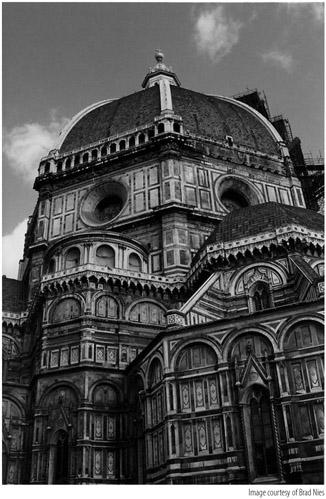 Figure 3.1: Brunelleschi s Dome, Florence, Italy
 As building technologies continued to evolve over the centuries, the industry continued to compartmentalize and fragment. As buildings became increasingly complex, building systems required greater levels of specialization.
Copyright Wiley Publishing, Inc. 2008 under license agreement with Books24x7


 TABLE OF CONTENTS