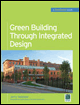
Green Building Through Integrated Design
The key benefit of integrated design process is its ability to achieve higher-performance results without significantly increasing overall building costs. Costs are the single most important factor in the development and construction world. The reason is simple: Design and construction costs are hard because they are real and occur in the present, whereas benefits such as projected energy savings, water savings, and productivity gains are soft because they are speculative and occur in the future. Therefore, a benefit-cost analysis for each project is crucially important, to convince building owners, design teams, and developers to proceed with sustainable design measures and the LEED certification effort. This approach is addressed more fully in Chap. 8.
The biggest barrier to green buildings is the perception that they cost more. A survey in the summer of 2007 revealed that 89 percent of respondents, comprising experienced executives and participants in the building design and construction industry, believed that green buildings cost more, with 41 percent believing that they cost more than 10 percent additional. [*] The World Business Council for Sustainable Development reported similar results in an international survey in the summer of 2007. Respondents to a 1400-person global survey estimated the additional cost of building green at 17 percent above conventional construction! At the same time, survey respondents put greenhouse gas emissions from buildings at 19 percent of world total, while the actual number of 40 percent is double this, counting both residential and commercial buildings. [ ]
These surveys reveal that...