Grid Computing for Electromagnetics

Supported with 110+ illustrations, this cutting-edge book clearly describes a high-performance, low-cost method to solving huge numerical electromagnetics problems.
 TABLE OF CONTENTS
 The FDTD method is one of the most frequently used numerical approaches in the EM community. Being a full-wave solver, it very often requires huge amounts of computational power, thus rendering the solution of large problems unaffordable with traditional workstations. Moreover, because of its algorithmic properties, the FDTD method is highly amenable for an implementation on HPC platforms. Consequently, it is an effective benchmark for a migration toward computational grids.
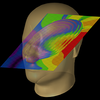
In this chapter, we shortly resume the method, proposing the most basic concepts and equations. Afterwards, a general discussion is proposed on the problems opened by an FDTD parallelization. A flexible parallel algorithm is proposed, and its attractive features for multiprocessor computers are discussed. The FDTD parallel implementation, based on MPI library, paves the way to a straight migration towards GC, thanks to MPICH-G2. Practical guidelines are given in order to accomplish this migration. Results are given in order to allow the reader to estimate the attainable performance, for a certain bandwidth, platform, and protocols in the GC. A benchmark on a relevant human-antenna interaction problem is proposed, for an interdepartmental computational grid. Some remarkable achievements are also focused, demonstrating that investing in GC promises wider results than the "simple" increase in CPU power or memory availability.
The FDTD approach was introduced in a pioneering paper by Yee in 1966 [1]. Since that time, it has experienced great success, basically due to its simplicity and versatility. It was...