Handbook of Machining and Metalworking Calculations
With easy-to-use tables, charts, listings, and formulas, this convenient hands-on resource will help you solve virtually any problem involving metalworking and machining tools and applications.
 TABLE OF CONTENTS
 Milling is a machining process for generating machined surfaces by removing a predetermined amount of material progressively from the workpiece. The milling process employs relative motion between the workpiece and the rotating cutting tool to generate the required surfaces. In some applications the workpiece is stationary and the cutting tool moves, while in others the cutting tool and the workpiece are moved in relation to each other and to the machine. A characteristic feature of the milling process is that each tooth of the cutting tool takes a portion of the stock in the form of small, individual chips.
Typical cutting tool types for milling-machine operations are shown in Figs. 5.11a to l.

Milling Methods
Peripheral milling (slab milling)
Face milling and straddle milling
End milling
Single-piece milling
String or gang milling
Slot milling
Profile milling
Thread milling
Worm milling
Gear milling
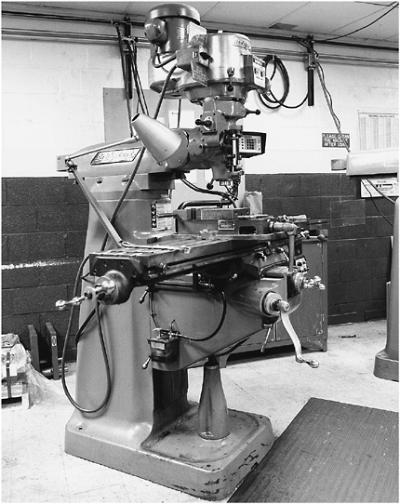
Modern milling machines have many forms, but the most common types are shown in Figs. 5.12 and 5.13. The well-known and highly popular Bridgeport-type milling machine is shown in Fig. 5.12. The Bridgeport machine is often used in tool and die making operations and in model shops, where prototype work is done. The great stability and accuracy of the Bridgeport makes this machine popular with
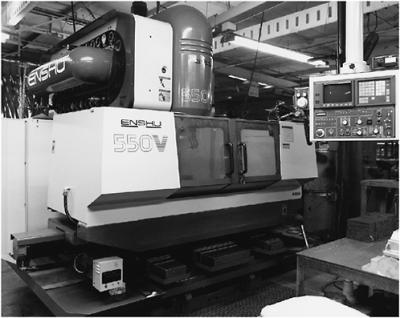
The modern machining center is being used to...