Heat Transfer

Offering complex and timely real-world problems that are inherently interesting, this book provides engineers with the capability, tools, and confidence to solve real-world heat transfer problems.
 TABLE OF CONTENTS
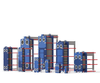
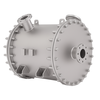
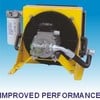
 A heat exchanger is a device that is designed to transfer thermal energy from one fluid to another. The term heat exchanger like heat transfer is inconsistent with the thermodynamic definition of heat; these devices would be more appropriately called thermal energy exchangers. However, the term heat exchanger is ubiquitous. Heat exchangers are also ubiquitous; nearly all thermal systems employ at least one and usually several heat exchangers.
The background on conduction and convection, presented in Chapters 1 through 7, is required to analyze and design heat exchangers. This section reviews the applications and types of heat exchangers that are commonly encountered. Subsequent sections provide the theory and tools required to determine the performance of these devices.
You may be unaware of just how common heat exchangers are in both residential and industrial applications. For example, you live in a residence that is heated to a comfortable temperature in winter and possibly cooled in the summer. Heating is usually accomplished by combusting a fuel (e.g., natural gas, propane, wood, or oil) that provides the desired thermal energy, but also produces combustion gases that can be harmful. Therefore, your furnace includes a heat exchanger that transfers thermal energy from the combustion gases to an air stream that can be safely circulated through the building.
You shower and wash clothes and dishes using water that is much warmer than the temperature of the water supplied by the city or a...