Overview
Only two decades ago, telecommunications still meant "telephone and telegraph." Telephony started as a private enterprise in the early days, but by the beginning of the twentieth century public administration controlled long distance communications in the United States, United Kingdom, and Europe. Those of us born before the 1980s were raised with the concept of the telephone as a public utility like electricity, water, public roads, and postal service.
In most countries a single-state-controlled post, telephone, and telegraph (PTT) company managed both the postal service and telephone company until well into the 1980s. These state monopolies treated telephony not as a business, but a public utility or even a privilege. Some countries had year-long waiting lists for new telephone subscriptions until well into the 1980s. Figure 1.1 shows the front cover of a children's book from 1938, explaining the services of the Dutch PTT. In less than a generation, the communications landscape has changed completely. Most of us still have telephones, but different companies now compete to serve our calls. In addition, apart from telephony we now communicate by e-mail, browsing, downloading, short messaging, mobile telephony, voice over Internet, even videoconferencing.
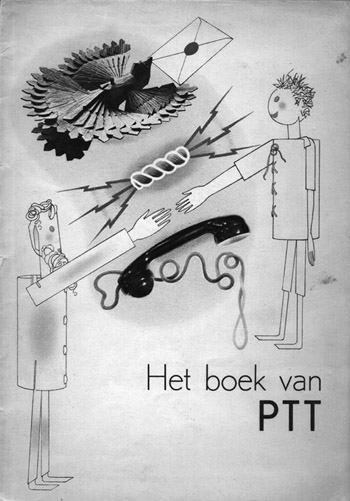 Figure 1.1: A 1938 book dedicated to the Dutch PTT [1]. (Courtesy of KPN Beeldbank.)
 Telecommunications are no longer the exclusive domain of a few national PTTs, and have become a competitive market like any other. Companies that operate from their owner's garage now compete with international giants. This book is about the technologies available to...


 TABLE OF CONTENTS