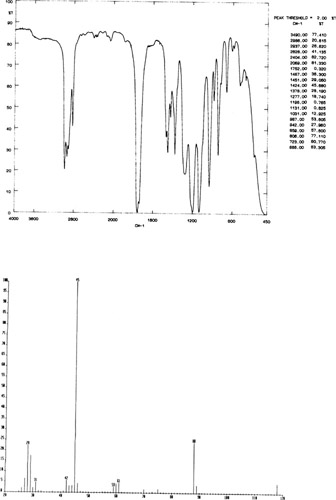
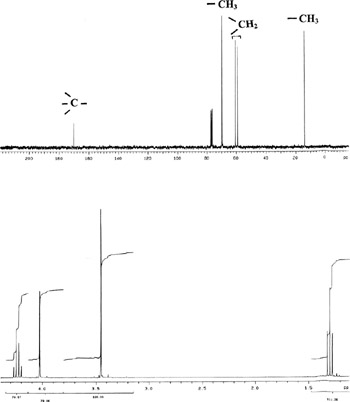
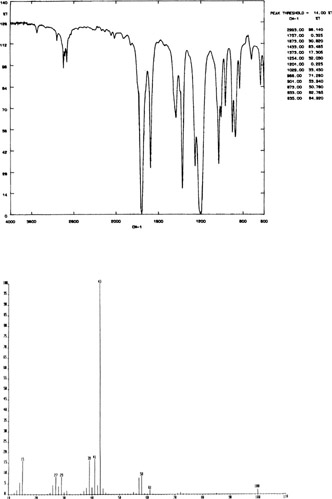
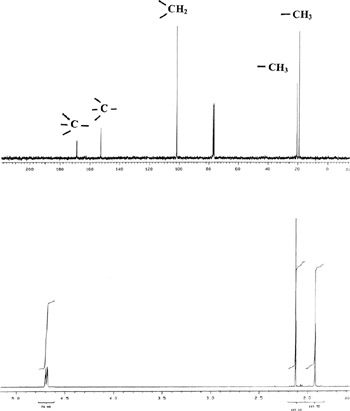
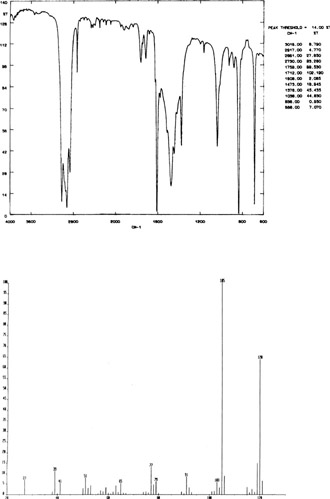
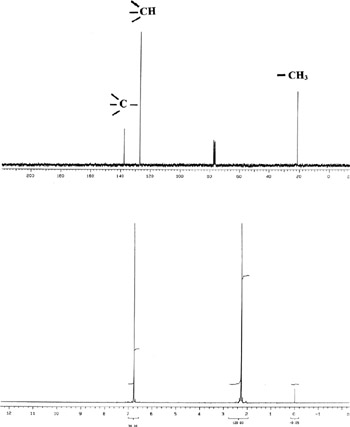
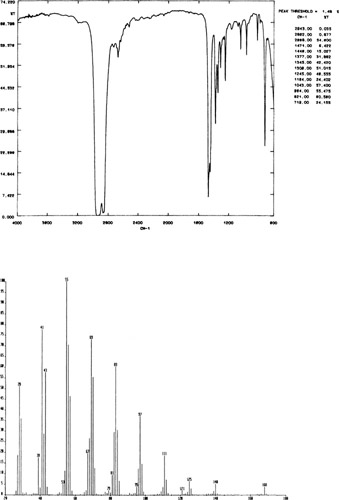
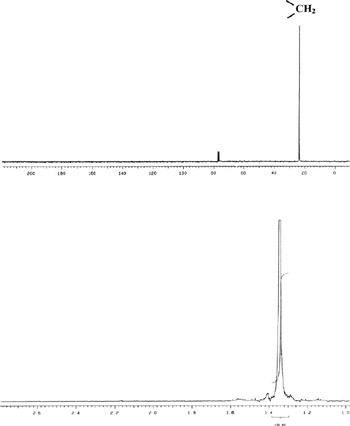
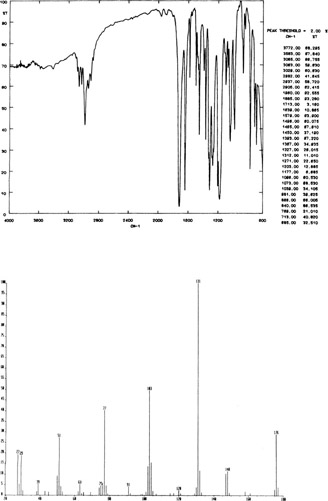
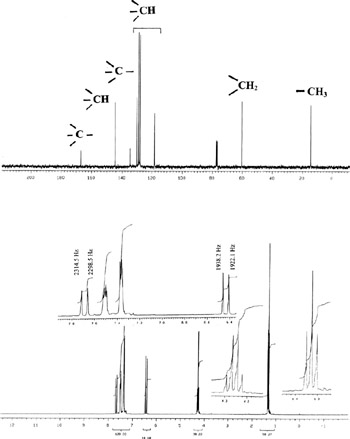
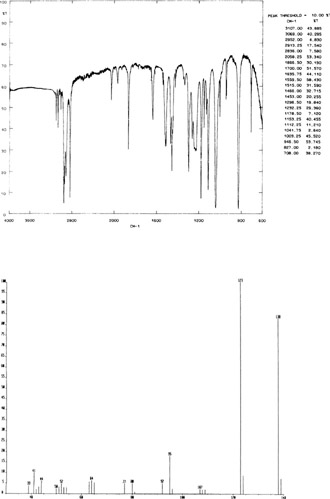
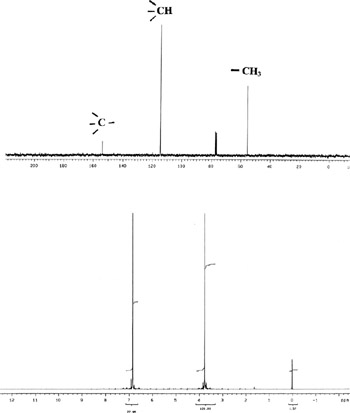
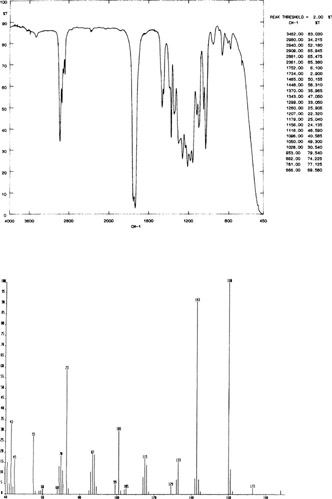
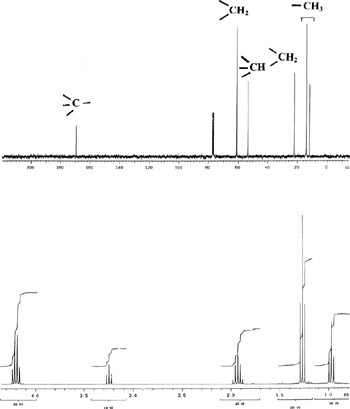
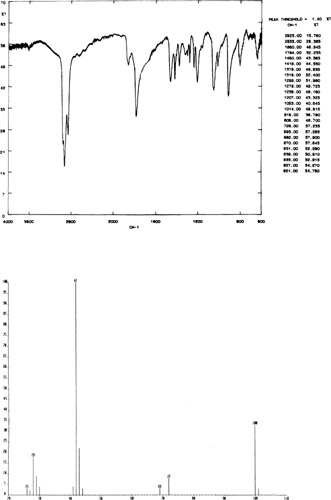
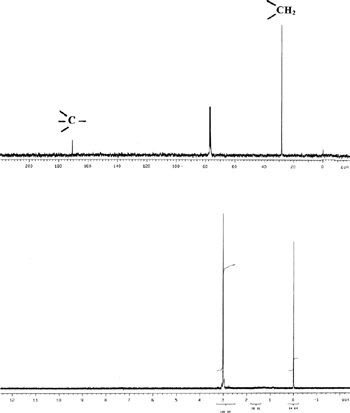
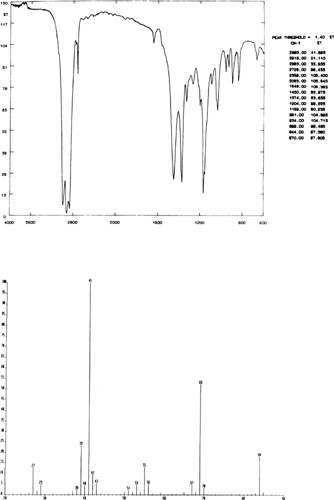
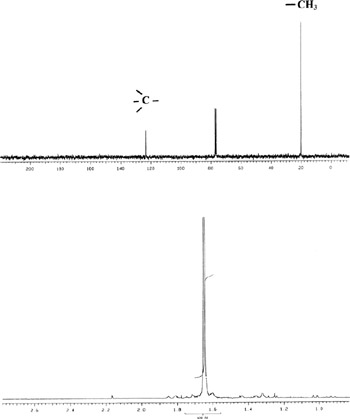
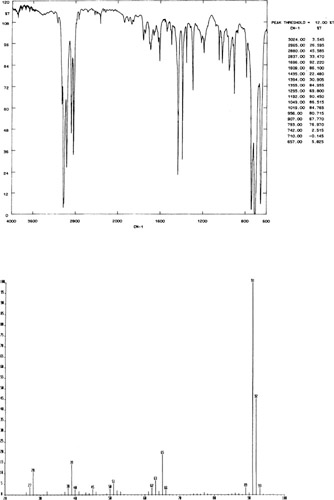
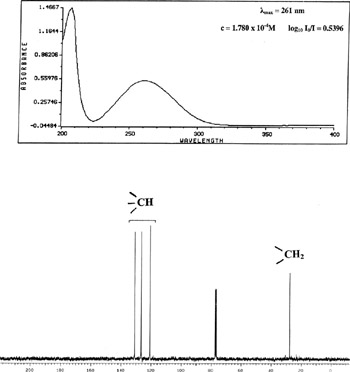
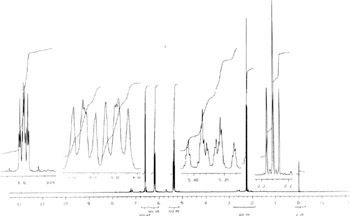
The spectra in this exercise are more difficult to interpret than those in the previous chapter. This is not the result of supplying spectra of cyclic and rigid systems you need to go more deeply into 1H NMR spectroscopy to solve those. These spectra are more difficult to solve either because they are complex in the sense of having a number of functional groups, or because they come into the category which Professor Abraham once described as deceptively simple . Three of the samples have NMR spectra which could hardly be simpler, but it does not make them easy to solve. You need to remain aware of the effects of symmetry in considering these spectra, but above all you need some imagination.
The spectra of 10 samples are provided, some easier than others. All can be solved from the spectra given one or two of the spectra in fact are hardly necessary, which is exactly the situation you will find when working at the bench.
Answers
| 1. | Ethyl methoxyacetate |
| 2. | Propen-2-yl acetate (isopropenyl acetate) |
| 3. | 1,3,5-Trimethylbenzene |
| 4. | Cyclododecane |
| 5. | Ethyl trans-3-phenylprop-2-enoate ( trans-ethyl cinnamate) |
| 6. | 1,4-Dimethoxybenzene |
| 7. |
Copyright The Royal Society of Chemistry 2000 under license agreement with Books24x7

 TABLE OF CONTENTS