ISA Handbook of Measurement Equations and Tables, 2nd Edition

Popular devices for humidity measurement include the hygrometer, a device which measures only relative humidity; thermohygrometer, a device which measures both temperature and humidity; psychometer, which measures humidity and dew point through water evaporation rate interpretation; and dew point meter, which measures the temperature at which moisture will form in the sampled environment. In process control, moisture and temperature often need to be measured in combination.
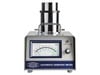
Thermohygrometers are available in wall mount, dial meter type units that do not require electrical power and digital models. Battery operated digital units are popular. Dial meter type thermohygrometers generally use a "cellulose" sponge type sensor for humidity and a spring or glass bulb thermometer for temperature. As moisture increases, the sponge expands and the lever mechanism moves the indicating needle. Accuracies are typically in the +/- 3% range, and response time is slow. Electronic thermohygrometers generally use either a capacitance or resistance sensor. As the humidity rises, the circuit resistance or capacitance changes a digital display reading.
When portability is needed, a psychometer is often used. It typically has two thermometers-a normal "dry" bulb thermometer, plus another called the "wet" bulb, featuring a wick moistened with water. As air passes over the two thermometers, two temperatures (wet and dry bulb) are generated. Using a table, the humidity can be calculated.
| Measurement Factor | Measurement Description | Units of Measure |
|---|---|---|
| Wet Bulb Thermometer | The temperature of a wetted thermometer in a stream of air. |