Several generic families of conic problems are of special interest, from the viewpoint of both theory and applications. The cones underlying these problems are simple enough, so that one can describe explicitly the dual cone. As a result, the general duality machinery we have developed becomes algorithmic, as in the LP case. Moreover, in many cases this algorithmic duality machinery allows us to understand more deeply the original model, to convert it into equivalent forms better suited for numerical processing, etc. The relative simplicity of the underlying cones also enables one to develop efficient computational methods for the corresponding conic problems. The most famous example of a "nice" generic conic problem is, doubtless, LP; however, it is not the only problem of this sort. Two other nice generic conic problems of extreme importance are conic quadratic and semidefinite programs. We are about to consider the first of these two problems.
3.1 Conic quadratic problems: Preliminaries
Recall the definition of the m-dimensional ice cream ( ? second-order ? Lorentz) cone L m:
A conic quadratic problem is a conic problem
for which the cone K is a direct product of several ice cream cones:
In other words, a conic quadratic problem is an optimization problem with linear objective and finitely many ice cream constraints
where
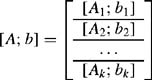
is the partition of the data matrix [ A; b] corresponding to the partition of y in (3.1.1). Thus, a conic quadratic program can be written as
Let us...
Copyright Society for Industrial and Applied Mathematics 2001 under license agreement with Books24x7


 TABLE OF CONTENTS