Maintenance of Instruments & Systems, 2nd Edition

Maintenance management has progressed over the years from a rather "hit-or-miss" attempt at keeping the plant going through a "trial-and-error" approach to complicated computer-assisted management of many complex maintenance operations. Record keeping and inventory control are just a couple of the necessities that have gone "high tech" in the maintenance organization today. Maintenance training has also taken on a new look. Periodic job/task analyses allow matching individual skills to the required tasks of maintenance personnel.
Training for upward progression in one's job has become vital to a dynamic organization. Many opportunities for effective use of maintenance workers can be analyzed from a review of a typical maintenance worker's day.
A recent "Factory Automation Maintenance Survey," conducted by Dick Slansky, Senior Analyst at ARC Advisory Group, showed industrial plants typically spend 75% of their maintenance budget in-house. The remaining 25% is done under contract.
Yes, maintenance management is big business and very important to the nation as it views its competitive position in world markets.
| Note | Maintainability and maintenance go with product reliability, quality assurance, and availability. Keeping the plant or process going at top performance will help assure products are of top quality and are competitive in world markets. |
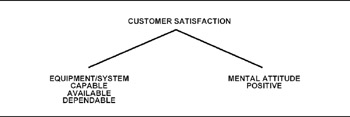
An objective of a sound maintenance management program must be customer satisfaction, making sure customers have the equipment and systems needed to perform the production function in the most efficient manner possible within the limits of the equipment and systems under their control (see Figure 5-1).