2.3. Membranes
Aside from bars, the percussion category also includes instruments comprising an elastic membrane attached to a circular frame: timpani, drums, congas, etc. Let us consider such a membrane with radius R, arranged horizontally, and the height of which is a function u( x, y, t) such that u( x, y, t) = 0 if r =  = R ( i.e., on the frame).
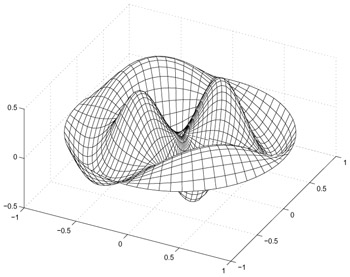 Figure 2.7: Eighth natural mode of a timpani
 We will assume that the tension T is the same over the entire membrane, and the mass per unit area is denoted by ?. If we follow the same process as with the string, we find that u is a solution to the wave equation (with in this case 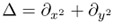 ):
):
| (2.14) | 
|
When substituted in equation (2.14) with k = 2 ?f/ c and  , the harmonic solutions, the form of which is u( x, y, t) = ?( x, y) exp(2 i ?ft), lead to the Helmholtz equation:
Because the membrane's edge is circular, it is convenient for purposes of analysis to switch to polar coordinates ( r, ?). We are going to search for solutions that can be written in the separated form ?( x, y) = ?( r) ?( ?), using the formula for the Laplacian in polar coordinates


 TABLE OF CONTENTS