Nanophotonics

Chapter written by Herv RIGNEAULT and Pierre-Fran ois LENNE.
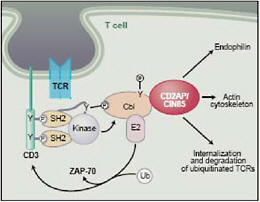
Since the beginnings of molecular biology, our view of signaling processes has been enriched by a large amount of molecular detail [GIL 02]. Starting from a stimulus, a signaling process is a cascade of molecular events which leads a cell to take a decision: gene expression, cell division, etc. These cascades are often depicted as block diagrams where each elementary step is sketched (protein interaction, recruitment ). Between these steps one can find arrows representing the flux of biological information (Figure 10.1).
Although these block diagrams provide a structured and coherent view of signaling processes in the cell, they do not provide any information concerning space (where precisely are the interactions localized?), time (what is the dynamic of molecular displacement and interaction dynamics?) and structure (is there any structural modification at the nanoscale?) which nowadays are fundamental to a detailed understanding of cell machinery. A precise description of information flux in the cell is difficult to obtain because of the multitude of molecules involved at various spatial and temporal scales.
Although it provides a nanometer resolution, the electronic microscope is unable to work on living samples. However, optical techniques are well adapted to work on living cells and tissues.
With this constraint, instruments have to exhibit dedicated characteristics such...