National Consensus Standard for Configuration Management
The configuration identification function is the basis from which the configuration of products is defined and approved; products and documents are labeled; changes are managed; and accountability is maintained throughout the product life cycle. Configuration identification establishes:
A method for organizing the composition of the product elements and associated information;
Unique identification of products and product configuration information;
Consistency between a product itself and the information about the product;
Product attributes that are defined, documented and baselined.
Define the attributes of a product and its interfaces in the product definition information and use it as the basis for product operational information.
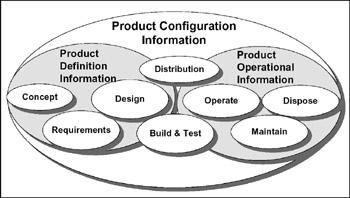
Product configuration information consists of product definition information and product operational information as illustrated in Figure 2.
Product definition information describes the product's performance, functional, and physical attributes, including requirements information, (e.g., specifications, requirements documents) and design information, (e.g. drawings, part models, software listings and design descriptions). Product definition information provides the technical basis for actions taken during all product life cycle phases, for product validation, and for product operational information.
Product operational information is derived from the product definition information. Product operational information consists of procedures and technical information needed by operators and support personnel to operate, maintain and dispose of the product including operating procedures, security procedures, maintenance procedures, spare parts lists, and disposal methods. Product operational information also includes field data that can be fed back into the product design/improvement and the...