The New McGraw-Hill Telecom Factbook, Second Edition
A plain-English guide anyone can use to plan and acquire telecommunications products and services!
 TABLE OF CONTENTS
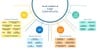
 You are approaching the end of the McGraw-Hill Telecom Factbook. If you look back, you should now be able clearly to discern the book's building-block structure and its focus on relationships between advanced technology and modern business needs. Part 1 begins with basic definitions, terminology, and background, providing a basis for the more complex explanations of modern telecommunications technologies, services, and operations that follow. It then moves to discussions of historical and current regulatory environments and how they have shaped the business and technical infrastructures that now deliver telecommunications services.
Part 2 presents fundamentals of transmission, multiplexing, circuit switching, packet communications, and advanced network concepts. These chapters provided an in-depth, "under the covers" look at technologies and techniques supporting today's advanced telecommunications services, many of which are completely new since our book's first edition. These include the Internet, a relatively unknown network for research and education communities before its debut as the World Wide Web in 1994, frame relay and ATM data services, and ubiquitous wireless services.
Part 3 explains voice communications services from several viewpoints. Premises services are discussed, as are important distinctions between access and transport services. This part continues with descriptions of tariff structures, fundamentals of traffic engineering, voice network design principles, and characteristics of cost-effective business networks. The final chapter in Part 3 relates price structures to popular voice services and...