Noise in Linear and Nonlinear Circuits

With the increasing use of phase and phase-amplitude modulation in cellular telephone and radio systems, the analysis of phase noise in oscillators has become a subject of critical importance in industry. Although phase noise has always been an important subject, the development of theory and simulation technology in the past decade has allowed a quantitative treatment, and, at least in principal, the ability to minimize it.
In this chapter, we begin by treating basic oscillator theory in a more or less historical manner, showing how classical approaches lead to a more complete theory. We then examine noise theory itself, and ways to optimize these circuits.
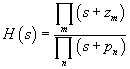
The conditions for stability of a linear system are simple and well known: a transfer or impedance function of the form
| (8.1) | |
must have no poles (zeros of the denominator) in the right half of the s plane. When such poles exist, the response to a small, transient excitation grows exponentially. Linear circuit theory cannot predict the degree of growth of the instability; nonlinearities in the circuit limit it. In an oscillator we want a small excitation (such as noise in the circuit or the turn-on transient) to create a growing sinusoidal response. A stable oscillation occurs when the pole is on the j ? axis; that is, the real part is zero. It is, impossible to achieve this condition exactly in a linear circuit; however, in a nonlinear circuit, it can be...