OFDM for Wireless Communications Systems

In this practical resource, established and new technologies are explained clearly and comprehensively, from OFDM basics to a detailed account of a new technique, hybrid OFDM CDMA slow frequency hopping.
 TABLE OF CONTENTS
 The past decade has shown major changes in the types of communications services provided to users and the infrastructure needed to support them. Besides the present-day telephony, Internet access, applications with remote servers, video on demand, and interactive multimedia are just a few examples of such services. Internet access is the service that has captured the biggest market and enjoys maximum penetration; this is shown in Figure 2.1 for year and number of users. Wireline communications networks providing these services are mostly known as wide area networks (WANs) and LANs.
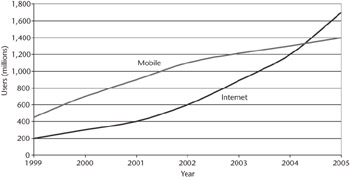
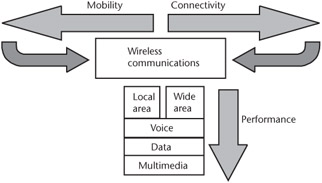
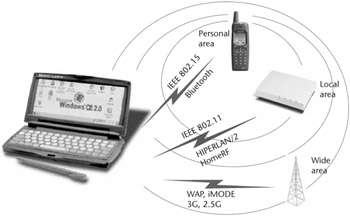
The overall market demand is basically for connectivity, mobility, and performance. Wireline services can provide connectivity and performance, but not mobility together with connectivity; this market demand is depicted in Figure 2.2. Wireless communications provide the solution to the requirements of mobility with connectivity. Thus, together with the growth of the Internet, there has been tremendous growth in the field of wireless communications. This has also been due to other inherent benefits of wireless, namely decreased wiring complexity, increased flexibility, and ease of installation. The main reason behind the growth of wireless has been WWANs or mobile technologies based on 2G/2.5G standards like Global System for Mobile Communications (GSM) and Personal Digital Cellular (PDC). These technologies mainly provide voice services and some data services at low data rates. 3G systems provide higher data rates with a maximum throughput of 2 Mbps (see Figure 2.3).