Photonics Rules of Thumb: Optics, Electro-Optics, Fiber Optics, and Lasers, Second Edition

There are always a few "orphans" in any large group. That certainly applies here. This collection of rules just did not fit into any of the other chapters of this book in a natural way, so they ended up here.
These rules are not to be ignored, however. Some of the most universal rules in the book appear here. For example, this is where we address the issues of estimating the time it takes light to go from place to place, how to deal with statistical issues, Moore's law (and Murphy's law), the definition of solid angle, methods of estimating temperature during a field test, photolithographic yield, and so forth.
Many of these rules can be used on field trials to approximate the environmental conditions, such as the Crickets as Thermometers, Distance to Horizon, and Speed of Light rules.
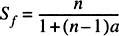
Amdahl's law for estimating the improvement in processing speed by employing parallel processors is
| where | S f | = speedup factor |
| n | = number of processors | |
| ? | = fraction of code which is sequential in nature |
Complex image processing problems can require massive processing time. Frequently, the suggested solution is to apply more than one processor and operate them in parallel. The measure of performance is called speedup. Speedup is defined as
The more complete form of speedup is defined for the general case of a task with m operations to be executed with p parallel processors. Here,