Portable Electronics Product Design and Development: for Cellular Phones, PDAs, Digital Cameras, Personal Electronics and More
In terms of the critical factors that affect portable electronic design, the user interface is most affected by the selection of the display. Almost by definition, the display represents the physical embodiment of the user interface for many products. The appropriate selection of display technology determines whether the user will be satisfied with the look and feel of the product, as it performs its primary function. Matching the visual quality of the display to the user interface requirements is of paramount concern to the portable electronic system designer, and displays have a variety of properties which must be considered and matched against the user interface requirements.
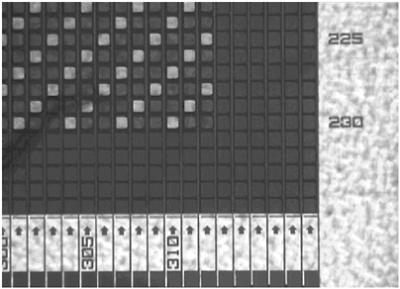
Pixel resolution determines the level of graphic detail that can be displayed in a single image frame. Resolutions vary from low-resolution, monochrome, segmented, character-only displays to high-resolution, color displays capable of displaying millions of pixels. Figure 4.1 shows a close-up view of the pixels in a color LCD. The pixel pitch is 117 ?m in this example.
The color range of a display determines the number of variations of color that can be displayed. The color range is usually described in terms of the number of bits that are available to specify the intensity of the color subpixels. Displays range from single color monochrome displays to full color displays capable of delivering a near infinite palette of colors.
The brightness indicates how much light is emitted from the surface of the display. Reflective displays have...