Principles of Spread-Spectrum Communication Systems
Chapter 7: Detection of Spread-Spectrum Signals

This chapter presents a statistical analysis of the unauthorized detection of spread-spectrum signals. The basic assumption is that the spreading sequence or the frequency-hopping pattern is unknown and cannot be accurately estimated by the detector. Thus, the detector cannot mimic the intended receiver.

7.1 Detection of Direct-Sequence Signals

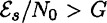
The results of Section 2.3 indicate that the maximum magnitude of the power spectral density of a direct-sequence signal with a random spreading sequence is , where is the symbol energy and G is the processing gain. A spectrum analyzer usually cannot detect a signal with a power spectral density below that of the background noise, which has spectral density N 0/2. Thus, a received is an approximate necessary, but not sufficient, condition for a spectrum analyzer to detect a direct-sequence signal. If , detection may still be probable by other means. If not, the direct-sequence signal is said to have a low probability of interception.

Ideal Detection

Detection theory leads to various detection receivers depending on precisely what is assumed to be known about the signal to be detected. We make the idealized assumptions that the chip timing of the spreading waveform is known and that whenever the signal is present, it is present during the entire observation interval. The spreading sequence is modeled as a random binary sequence, which implies that a time shift of the sequence by a chip duration corresponds to the same stochastic process. Thus, to account for uncertainty in the chip...

UNLIMITED FREE
ACCESS
TO THE WORLD'S BEST IDEAS

SUBMIT
Already a GlobalSpec user? Log in.

This is embarrasing...

An error occurred while processing the form. Please try again in a few minutes.

Customize Your GlobalSpec Experience

Category: Radio Modems
Finish!
Privacy Policy

This is embarrasing...

An error occurred while processing the form. Please try again in a few minutes.