The input and weight vectors of an adaptive filter are
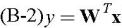
where T denotes the transpose and the components of the vectors may be real or complex. The filter output is the scalar
The derivation of the optimal filter weights depends on the specification of a performance criterion or estimation procedure. A number of different estimators of the desired signal can be implemented by linear filters that produce (B-2). Unconstrained estimators that depend only on the second-order moments of x can be derived by using performance criteria based on the mean square error or the signal-to-noise ratio of the filter output. Similar estimators result from using the maximum -a-posteriori or the maximum-likelihood criteria, but the standard application of these criteria includes the restrictive assumption that any interference in x has a Gaussian distribution.
The difference between the desired response d and the filter output is the error signal:
The most widely used method of estimating the desired signal is based on the minimization of the expected value of the squared error magnitude, which is proportional to the mean power in the error signal. Let H denote the conjugate transpose and an asterisk denote the conjugate. We obtain
where
is the N N Hermitian correlation matrix of x and
is the N 1 cross-correlation vector. If we assume that y ? 0 when W ? 0, then R xx must be positive definite.
In terms of its real...
Copyright Springer Science+Business Media, Inc. 2005 under license agreement with Books24x7


 TABLE OF CONTENTS