Printed Circuit Boards

Written by a world-renowned electronics expert, this reader-friendly guide helps engineers and technicians solve issues in PCB layout, fabrication, assembly, and testing.
 TABLE OF CONTENTS
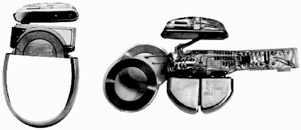
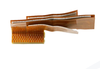
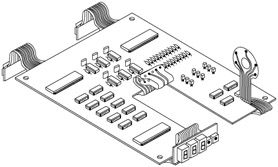
 Flexible printed circuit boards interconnect rigid boards, displays, connectors and various other components in a three-dimensional package. They can be bent-folded or shaped to interconnect multiple planes or conform to specific package sizes. Flex circuits also have the ability to connect moving components, a prime requirement in disk drives, printer heads and other continually moving electronic assemblies. Figure 12.1 shows typical flexible circuits.
Flexible printed circuits constitute a reliable alternative to conventional wiring. They not only improve connection reliability, but also simplify assembly and improve component appearance. By eliminating bulky wires, flex circuits providea cleaner and neater appearance. Generally, flex circuits fit only one way and therefore, cause fewer errors during installation and servicing, thereby reducing re-work and troubleshooting time. Since a flex circuit is more resistant to shock and vibration than a rigid PCB, repair and replacement costs in case of the former are obviously much less. Flex circuits are thin, light in weight and durable. They can be designed to meet a wide range of temperature and environmental extremes. They are excellent for designs with fine line traces and high density circuitry, and are more suited for dynamic applications and vibration conditions than are conventional printed circuit boards. Their high density and light weight make them ideally suitable for redundant circuitry for satellites and avionic instruments, advanced scientific sensors, flexible heating elements, medical equipment, robots and security devices.