Printed Circuit Boards

Written by a world-renowned electronics expert, this reader-friendly guide helps engineers and technicians solve issues in PCB layout, fabrication, assembly, and testing.
 TABLE OF CONTENTS
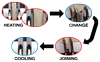
 By definition soldering is the process of joining two or more pieces of metal by using a metal alloy whose melting temperature is lower than the metals being joined. It takes place at temperatures below 450 C. Hard Soldering (Brazing), on the other hand which is commonly used in fine jewellery takes place at temperatures above 450 C. Hard soldering on such metals as silver, gold, steel and bronze makes a much stronger joint than soft soldering. The shearing strength of in case of hard soldering is 20 to 30 times stronger them softer soldering.
All the non-ferrous metals (gold, silver copper, brass or bronze) that have a relatively high melting temperature can be soldered with either gold or silver solder. Both gold and silver solders are available in different melting temperatures and in different shapes and forms.
The melting temperature of gold and silver solder is mainly determined by the content of zinc: the higher the zinc content, the lower the melting temperature. However, zinc is what turns the lower melting temperature silver solders yellowish-grey. Pits in the solder seam are caused when the solder is overheated and the zinc burns out. Again, using a higher temperature solder as well as controlling the heat will help prevent pitting. The hard soldering alloy for use on steel and brass contains silver, copper, zinc and cadmium.
Extra caution must be used in hard soldering. The fire hazard from the torch flame, the...