The Science of Ice Cream

VISUALIZATION AND CHARACTERIZATION OF MICROSTRUCTURE

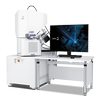
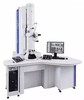
Optical and electron microscopy are used to visualize the microstructure of ice cream. Optical microscopy has the advantages of being simple, inexpensive and convenient, but it has limited resolution and the sample preparation alters or destroys some parts of the microstructure. Electron microscopy which uses a beam of electrons to image the sample in the frozen state, and provides a very wide range of magnifications but is more complex and expensive. Electrons are emitted from a source and accelerated towards the sample by a positive voltage. The beam is focused onto the sample using metal apertures and magnetic lenses. There are two different types of electron microscopy, scanning electron microscopy (SEM) and transmission electron microscopy (TEM).

Scanning Electron Microscopy

Scanning electron microscopes work by scanning the electron beam back and forth across the sample in a grid. As the beam hits the sample electrons are knocked off the surface. A detector counts the number of electrons emitted from each spot on the sample and builds up an image: the more electrons emitted, the brighter the corresponding spot on the image. Scanning electron microscopy provides three-dimensional images of the surface microstructure, and can achieve a wide range of magnifications, routinely 10 to 10000. It can image the most important length scales in ice cream, from fat droplets (~1 ?m) through ice crystals and air bubbles (10 100 ?m) to an overall view of the microstructure (> 1 mm). SEM is therefore a popular...

UNLIMITED FREE
ACCESS
TO THE WORLD'S BEST IDEAS

SUBMIT
Already a GlobalSpec user? Log in.

This is embarrasing...

An error occurred while processing the form. Please try again in a few minutes.

Customize Your GlobalSpec Experience

Category: Microscopes
Finish!
Privacy Policy

This is embarrasing...

An error occurred while processing the form. Please try again in a few minutes.