SFPE Engineering Guide to Performance-Based Fire Protection Analysis and Design of Buildings

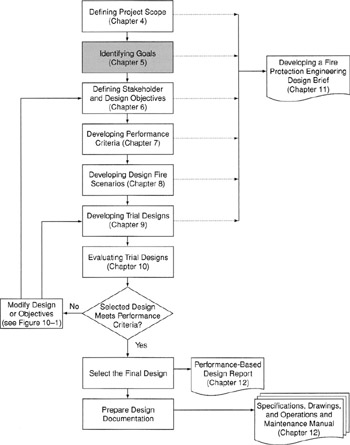
The next step in the performance-based analysis and design process is the determination of the fire safety goals of interest to stakeholders (see Figure 5-0) and the prioritization of them for the specific project being addressed. Goals are identified through discussions with the stakeholders and a review of background materials.
The following list presents four interrelated fundamental goals for fire safety:
Provide life safety for the public, building occupants, and emergency responders. Minimize fire-related injuries, and prevent undue loss of life.
Protect property. Minimize damage to property and cultural resources from fire. Protect building, contents, and historical features from fire and exposure to and from adjacent buildings.
Provide for continuity of operations. Protect the organization's ongoing mission, production, or operating capability. Minimize undue loss of operations and business-related revenue due to fire-related damage.
Limit the environmental impact of the fire.
Securing life, property, operations, and the environment from damage or harm due to fire will often require the implementation of fire protection measures for the control or management of fire. The implementation of such fire protection measures can, however, impose a potential for nonfire damage, which might need to be considered. Allied goals of fire safety that might need to be developed and addressed in a performance-based design include, but are not limited to, the following:
Provide for historic preservation by identifying a historic building's character-defining spaces, features,...