SFPE Engineering Guide to Performance-Based Fire Protection Analysis and Design of Buildings

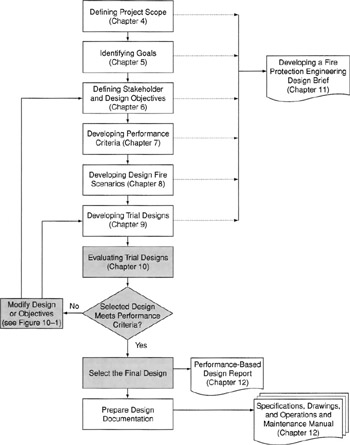
Evaluation is the process of determining if a trial design (developed in Chapter 9) meets the performance criteria (developed in Chapter 7) when challenged by the postulated design fire scenarios (developed in Chapter 8).
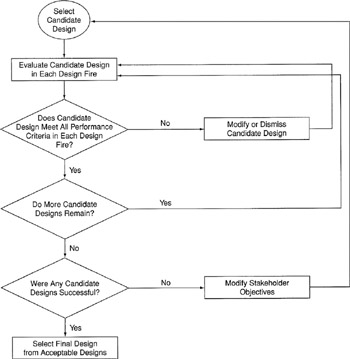
The selected set of trial design(s) are tested against each design fire scenario. The intent is to demonstrate that in the design fire scenario, performance criteria will not be exceeded. If the trial design is successful, any remaining trial designs might be evaluated as necessary. If a trial design is not successful, the trial design might be modified and retested, or it might be dismissed. After the selected trial designs have been tested, a final design is selected from among those found successful. If there are no successful trial designs, the engineer should ensure that the trial designs considered all possible mitigation strategies. If after considering all possible mitigation strategies, there still are not any successful trial designs, the stakeholder objectives and performance criteria should be revisited (see Figure 10-1).
The technical detail needed varies with the evaluation level (see Section 10.2). System- or building-level applications might require independent evaluations of the individual fire protection components as well as a higher-order evaluation of the complete building design. Prior to beginning the evaluation process, the level of evaluation necessary should be established and agreed to by the stakeholders.
When considering whether...