Site Planning and Design Handbook

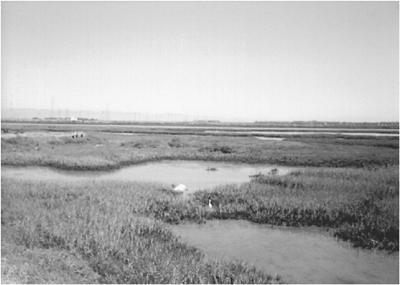
Wetlands are defined as those areas that are inundated or saturated by water often enough and long enough to support vegetation that is typically adapted for life in wet soil conditions (Fig. 7.25). Wetlands play an important role in the hydrologic cycle, and they are very productive environments. Nutrients collect in wetlands, and accordingly they generally display a great deal of biodiversity in plants and animals. Wetlands are identified by the presence of hydric soils and hydrophytic vegetation, along with the hydrology necessary to support the vegetation. Hydric soils are identified by color and include gleyed soils typical of wetlands (dark clays) as well as rich organic soils. Hydric soils develop under sufficiently wet conditions to support the growth and regeneration of hydrophytic plants. A hydric soil evolves under conditions of saturation, in areas that are flooded or ponded long enough during the growing season to develop anaerobic conditions in the upper part.
Wetland hydrology is usually identified as areas ranging from saturated soils (within 18 in of the surface) or submerged up to 2 ft. The most important source of water for most wetlands is groundwater. Hydrophytic vegetation is vegetation that can live in water or on a substrate that is submerged or anaerobic at least part of the time. Wetlands can be classified as tidal or non-tidal, forested, scrub-shrub, or emergent. Coastal wetlands make up only about 5 percent of the...