Site Planning and Design Handbook

The risk associated with owning contaminated property was exacerbated by the Comprehensive Environmental Response Compensation and Liability Act (CERCLA), often referred to as the Superfund, which made landowners liable for contamination found on the property whether the landowner had caused the contamination or not. Purchasers became appropriately wary of buying a property that might be contaminated, often electing to purchase an undeveloped site instead.
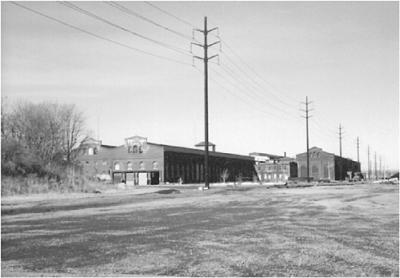
The practice of reusing previously developed sites has become more common in recent years because of a more favorable public policy environment. Often these sites are referred to as brownfields, and they are generally thought of as abandoned sites or properties that are significantly underused and undervalued because of environmental contamination or the general perception of contamination (Fig. 7.28). The definition of brownfield is ambiguous and can include many sites with little or no significant environmental issue. In the past, property owners vigorously sought to keep their property from being referred to as a brownfield, but with the advent of financial incentives, it is now sometimes considered to be a favorable designation.
Site design and planning practices sometimes must address residual contamination as part of the site development. The state of brownfield practice is to determine a management and design strategy that will minimize the risks associated with the contamination at an acceptable cost to benefit. On such sites environmental issues must be accounted for on the construction site as well as on the...