Sucker-Rod Pumping Manual
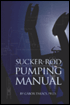
Full of illustrations, tables, and formulas, this book will provide the reader with everything they need to ensure successful sucker-rod pumping operations.
 TABLE OF CONTENTS
 This chapter deals with the methods and procedures that are available to analyze the operation of pumping wells. The first broad topic discussed at the beginning of this chapter covers the inflow performance testing of wells placed on rod pumping. As shown, special well testing procedures are required to conduct a production test, because the methods developed for flowing or gas lifted wells are not applicable. Among these, the acoustic determination of annular liquid levels is described, since such measurements form the basis of most of the testing procedures. The results of a properly conducted well test provide valuable information on actual well potential and help the pumping analyst to decide on possible changes to the pumping system.
The most common procedure for measuring and analyzing the operating conditions of rod pumping uses a polished rod dynamometer, which records rod loads against rod displacement. A section of this chapter presents the basics of sucker rod dynamometry and discusses the hardware used and the procedures followed when making dynamometer surveys. The basics of interpreting surface and downhole dynamometer cards are also presented.
The purpose of well testing is the determination of the well's inflow performance behavior. This involves the measurement of production rates for several bottomhole pressures and the construction of the well's IPR (inflow performance relationship) curve. Since the performance of any producing well constantly changes with the depletion of the reservoir and with other factors, wells must be tested regularly for changes in their inflow performance.