Understanding Water Quality Management: Technology & Applications

Water pollution is a general term used to describe the degradation of water quality resulting from the loss of the productive or aesthetic uses of the receiving stream. Water pollution causes water quality impairment. However, there are several broad categories of pollution, arising from a number of chemicals, combinations of chemicals, or other polluting factors. Some chemicals can cause or contribute to more than one type of pollution. Ammonia, for example, can contribute to oxygen depletion and eutrophication. At elevated concentrations, and in certain water quality situations, ammonia can also exert acute toxic effects on aquatic organisms.
The 1996 National Water Quality Inventory [7] ranked the five leading causes of water quality impairment (Table 2.1) for surface waters.
| Rank | Rivers | Lakes | Estuaries |
|---|---|---|---|
| 1 | Siltation | Nutrients | Nutrients |
| 2 | Nutrients | Metals | Bacteria |
| 3 | Bacteria | Siltation | Priority Toxic Organic Chemicals |
| 4 | Oxygen-Depleting Substances | Oxygen-Depleting Substances | Oxygen-Depleting Substances |
| 5 | Pesticides | Noxious Aquatic Plants | Oil and Grease |
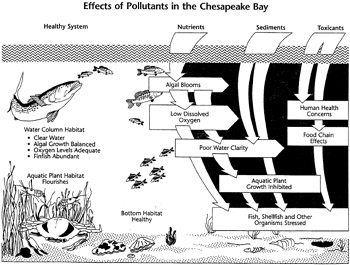
Figure 2.1 illustrates the effects of certain pollutant categories (nutrients, sediments, and toxicants) on the aquatic flora and fauna of Chesapeake Bay. Note the ecological differences between the healthy and the polluted systems and the effects of the different pollutant categories on stream health.