Vibration Spectrum Analysis: A Practical Approach, Second Edition

In the following pages, we will review the previously covered functions commonly found in an FFT spectrum analyzer in further detail. Less commonly used functions, such as power spectral density, special time windows, impulse response, and inverse transfer function will then be covered. The reader will find the definitions and explanations in this chapter to be useful when a test has already been run and the results are unintelligible. If this chapter is reread at that time, it should be possible to redesign the test to get more meaningful results. Other functions, which are available on some spectrum analyzers but are not really frequency domain properties, will be covered in Chapter 9.
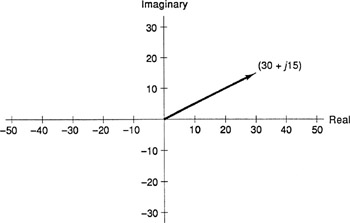
To gain a more in-depth understanding of the functions available in FFT spectrum analyzers, it is necessary to have at least a vague notion of the meaning of complex numbers. Complex numbers came about because no one knew what else to do about finding the square root of minus one. Since ?1 ?1 = +1, it follows that ??1 is not ?1. Furthermore, since +1 +1 = +1, +1 is not the answer either. What to do? Mathematicians solve the problem by assigning a value of i to ??1. Because electrical engineers use i as the symbol for current, they use j as their symbol for ??1. Taking the notation of the electrical engineers