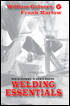
Welding Essentials: Questions & Answers, Second edition
Ignorance once dispelled is difficult to reestablish.
Laurence J. Peter
Most welding codes, standards, and specifications include a plan to assure production welds provide the quality required for the product. These plans usually include methods to verify that the welders who will apply the welds have the skill needed; this is done by welder qualification and certification documents. We will consider why welding codes are used, where they come from, which ones are most common, and where they are required. We will present typical qualification test specimens, weld test methods, and weld acceptance criteria. We will discuss the need for developed and documented Welding Procedure Specifications (WPS).
Why are welding codes (including standards and specifications) used?
Since codes have evolved over many years, they contain a body of collective experience on how to make sound welds. Codes are arranged as a systematic and comprehensive set of rules and standards for welding applications which are mandatory where the public interest is involved. By following established codes, weld reliability is greatly increased. Codes are updated continually as processes and product requirements change.
Where do welding codes come from?
Many codes are issued by professional organizations such as the American Welding Society (AWS) and the American Society of Mechanical Engineers (ASME) and trade associations like the American Petroleum Institute (API).
They are known as consensus standards. Committees of senior engineers and scientists within these organizations establish and update these codes.
Frequently government organizations adopt consensus codes outright giving them the...