Wireless Technology Basics: Signals, Modulation Types, and Access Technologies

Wireless networks are composed of radio towers, switching facilities, and databases that are interconnected and managed by a network operator (a "carrier").
Radio towers are poles, guided towers or free standing constructed grids that raise one or more antennas to a height that increases the range of a transmitted signal. Radio towers can vary in height from about 20 feet to more than 300 feet. A single radio tower may host several antenna systems that include paging, microwave or cellular systems. Radio towers are located strategically around the city to provide radio signal coverage to specific areas. At the base of the towers are electronic control rooms that contain the components to operate the radio portion of the communications system.
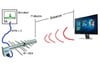
Base stations consist of one or more antennas, transmitters, receivers (for two-way systems), system controllers, communication links and power supplies. Transmitters provide the high level RF power that is supplied to the antenna. For broadcast systems, the amount of transmitter power can exceed 50,000 Watts. Radio receivers boost and demodulate incoming RF signals from mobile radios. If a base station contains receivers, it is typical to use one or more different antennas for the receivers. Controllers coordinate the overall operation of the base station and coordinate the alarm monitoring of electronic assemblies. Communication links allow a command location (such as a television studio or a telephone switching center) to control and exchange information with the base station. Base station radio equipment requires power supplies. Most base stations contain...