
Grinder Pumps Information

Grinder pumps are centrifugal pumps equipped with shredding systems to aid in the transport of solids filled media. The cutting devices facilitate solids maceration and shredding to prevent the pump and adjacent pipe from clogging. Slurries are then pumped under high pressure through a (usually small diameter) force main to a septic tank, pumping station, or sewer line. Grinder pumps are suitable for pumping sewage, sludge, manure, and other liquids that contain large or tough solids.
Operation
Centrifugal pumps are dynamic pumps which utilize centrifugal force via impellers to generate fluid momentum and velocity. Grinder pumps are centrifugal pumps equipped with a cutting system to grind solids that are present in the pumped liquid.
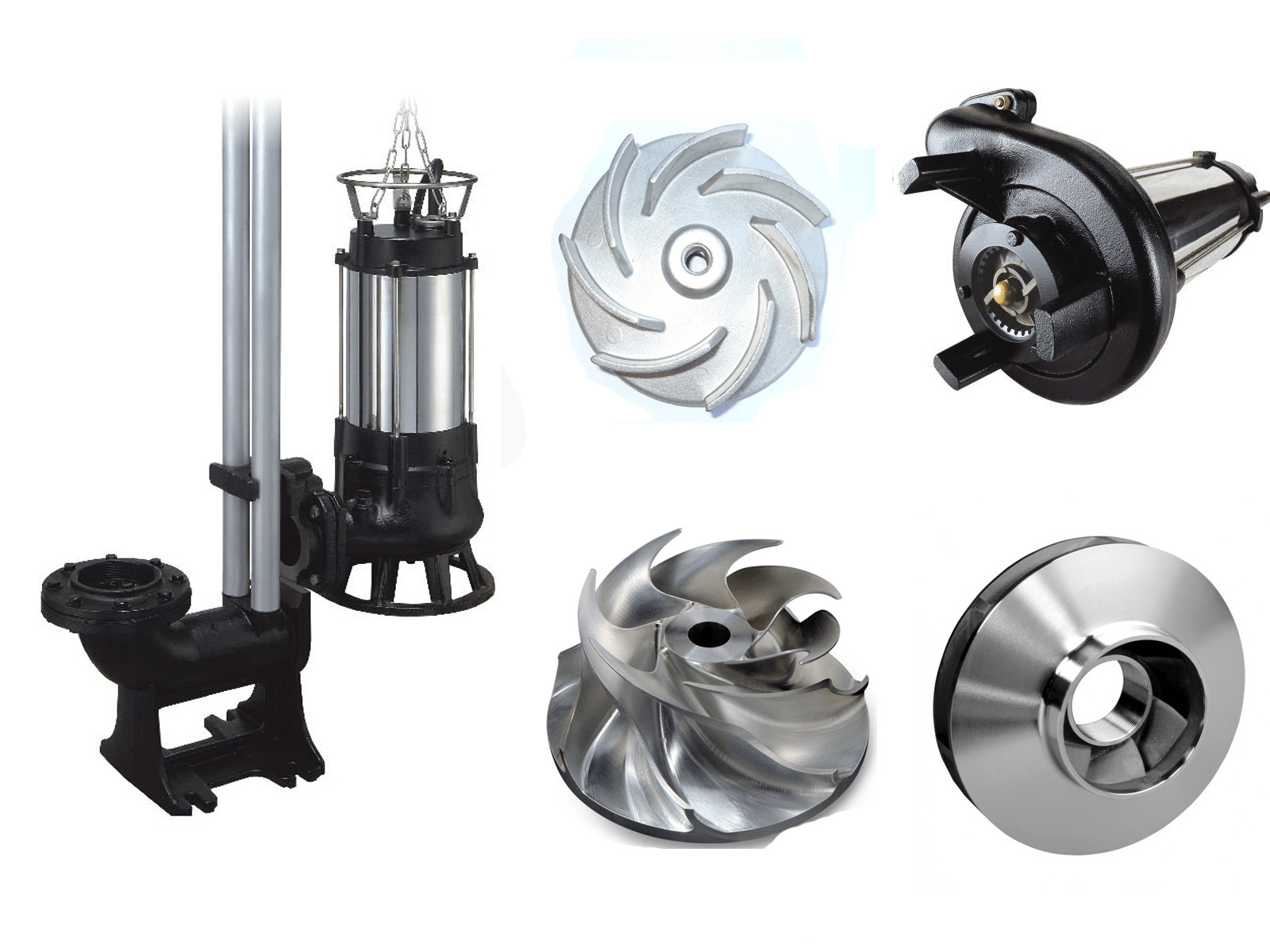
Grinder pump cutting blades and fittings.
Grinder pumps are able to generate higher pressures than traditional centrifugal designs, allowing them to transport thicker substances through smaller discharge outlets.
This video shows the cutting power and pumping power that grinder pumps can provide:
Video Credit: Liberty Pumps / YouTube
Specifications
The primary specifications to consider when selecting grinder pumps are flowrate, pump head, pressure, horsepower, power rating, outlet diameter, and operating temperature. These specifications are all described in detail in Engineering360's Pump Flow page.
Materials

The base material of a drum pump is important to consider, as it affects the type of media that can be handled effectively. System fluids may be abrasive, acidic, caustic, tacky, very hot, very cold, or otherwise hazardous. Base materials such as cast iron, plastic, and stainless steel possess different advantages for handling these various characteristics.
- Plastics are the least expensive base materials, and provide excellent corrosion resistance and protection from a broad range of chemicals.
- Stainless steel alloys provide protection against chemical and rust corrosion, and have higher pressure ratings than most plastics.
- Cast iron provides high strength and abrasion resistance, with high pressure ratings.
Grinder pumps is typically composed of corrosion-resistant stainless steel and powder-coated cast iron parts to withstand the processing of corrosive or harsh materials. For more information on materials and other pump features, visit the Pump Features page on Engineering360.
Applications

Grinder pumps are often installed on municipal sewage holding tanks. Wastewater from households or buildings collects in a holding tank and when the water reaches a certain level, a sewage grinder pump turns on to grind the waste and force the wastewater through the pressure pipe on to the sewage system. This sewage pump ensures that solids are processed as they leave the storage tank and helps to keep septic pipes clear of debris. Grinder pumps that are part of a residential septic system typically run off of household electricity and also come with an alarm system to let homeowners know if something is wrong with the pump. Residential or municipal grinder pumps are not typically designed to be used as a sump pump, since certain chemicals or materials may damage the pump or cause operating problems. However, some industrial grade grinder pumps are designed for use with sump pits and storage lagoons for emptying wastewater.
Grinder pumps may also be submersible for use in high head sewage applications where gravity is not sufficient to move effluent or wastewater. An industrial strength submersible pump includes a heavy-duty shredding unit with a centrifugal design and an open impeller. The open impeller ensures that solids are not caught in the pump.
For more information on pump types designed for specific applications, visit Engineering360's Pump Applications.
References
Discount Pumps - Grinder Sewage Pump
Liberty Pumps - Grinder Pumps / Systems
Image Credits:
Flygt, a Xylem brand | seepex, Inc. | Liberty Pumps | Shanghai Pacific Pump Manufacture Co., Ltd.