Maximizing Machinery Uptime

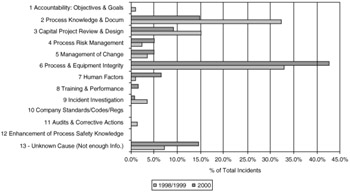
The PSM in the hydrocarbon processing industries is a systematic approach to minimizing the occurrence and adverse effects of operating incidents to people, environment, assets, and production. Process safety management is based on the understanding that incidents are rarely caused by a single equipment failure, human error, or environmental condition. Rather, it is held that most incidents occur due to one or more failures in the safety management system to adequately anticipate, prevent, and mitigate incidents. Process safety management is defined as a program or activity involving the application of management principles and analytical techniques to ensure the safety of process facilities. It is not occupational health and safety, industrial hygiene, environmental management or preventive maintenance (PM), although all of these should integrate with PSM efforts. An effective PSM system will cover the 12 elements shown in Figure 15-1.
What does Figure 15-1 tell us? In a database compiled by the Canadian Chemical Producers' Association from 1998 to 2000, over one-third of total process-related incidents were attributed to the Process and Equipment Integrity element. Within this element the contributors cited most often were PM and maintenance procedures. "This involves understanding what equipment is truly critical, establishing risk-based PM frequency, having procedures to carry out PM that can pick up faults, and ensuring PM findings are recorded and analyzed for trends on a particular piece of equipment or 'family' of equipment. Maintenance procedures include Permit...