Maximizing Machinery Uptime

Fault Tree Analysis (FTA) is a deductive method in which a hazardous end result is postulated and the possible events, faults, and occurrences which might lead to that end event are determined. Fault Tree Analysis also overlaps Sneak Circuit Analysis (SCA) because the FTA is concerned with all possible faults, including component failures as well as operator errors.
Sneak Circuit Analysis is used to troubleshoot and improve hydraulic, electronic, shutdown instrumentation and other control interfaces around process machinery [1].
Fault Tree Analysis is a "top down" analysis that is basically deductive in nature. The analyst identifies failure paths by use of a fault tree drawing. A fault tree is a graphical representation of a thought process. It is constructed from events and logical operators. An event is either a component failure or system operation. The events and their graphical representation are given in Table 8-1.
| Logic gates | |
|
| "OR" Gate denotes the situation whereby the output event will exist if any one input event is present |
|
| "AND" Gate denotes the situation whereby all the input events are required to produce the output event |
| Fault events | |
|
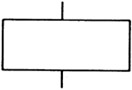
![]() | RECTANGLE denotes an event, usually a malfunction, which results from the combination of fault events through the logic gates |
|
![]() | DIAMOND denotes a fault event of which the causes have not been developed |
|
![]() | CIRCLE denotes a basic fault event. This category includes component failures whose frequency and failure mode are derived or known |
A fault tree commences...